If you’ve been looking into Batana oil recently, you’ve almost certainly come across this confusion.
Someone in a comment section calls it “just palm oil.” A product label lists it vaguely as a “palm-derived oil.” A well-meaning friend tells you it’s basically the same thing so you might as well save your money. And because both oils do come from palm fruits, the mix-up feels logical on the surface.
Not exactly. Batana oil does come from a palm, but the name doesn’t refer to the same product most of us know as commercial palm oil. They are associated with different oil-palm species and different traditions of use. Knowing the distinction helps you understand what you’re actually buying and using on your hair and skin.
Let’s clear it up properly.
Where They Come From: Two Different Plants, Two Different Continents
| Palm oil | Batana oil | |
|---|---|---|
| Palm species | Primarily Elaeis guineensis | Associated with Elaeis oleifera |
| Palm origin | West and Central Africa | Central and South America |
| Traditional association | Long history of food, household and personal-care use in West and Central Africa | Particularly associated with traditional use in Honduras |
| Commercial context | Major globally traded vegetable oil | Specialist oil predominantly known for hair and skin care |
| Same product? | No | No |
This is the most fundamental distinction and the one that unravels the confusion fastest.
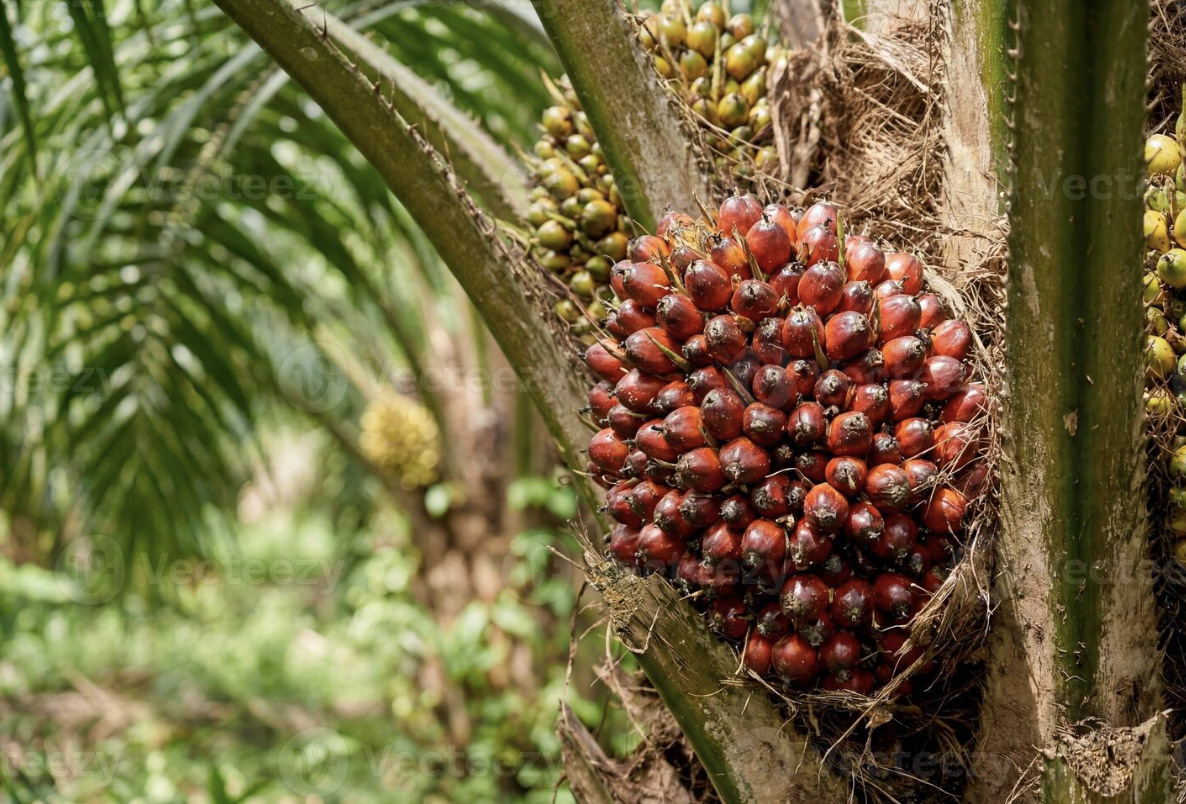
Palm oil is predominantly produced from Elaeis guineensis, the African oil palm, which is native to West and Central Africa. Palm oil is extracted from the fleshy part of the fruit, known as the mesocarp. Palm kernel oil is a separate oil extracted from the kernel of the same fruit, so palm oil and palm kernel oil should not be used as interchangeable names.
Today, palm oil is one of the most widely produced vegetable oils in the world, with the majority now grown in Southeast Asia particularly Indonesia and Malaysia due to large-scale agricultural expansion. Its ubiquity in commercial beauty and food products is a reflection of how affordable and versatile it is when produced at industrial scale.
Batana oil is traditionally associated with Elaeis oleifera, the American oil palm, a separate species found in Central and South America. Batana is particularly associated with Honduras and the Miskito people, where it has a longstanding place in traditional hair and skin care.
How They’re Produced: Industrial vs Artisanal
The way these oils reach the market can differ considerably, particularly when comparing large-scale commercial palm oil with traditionally produced Batana oil.
Commercial Palm Oil Production
- Large-scale production – Commonly produced at industrial scale for global food, household and personal-care markets.
- Mechanical extraction – Palm oil is extracted from the fleshy mesocarp of the oil-palm fruit.
- Often refined – Commercial palm oil may be refined, bleached and deodorised depending on its intended use.
- Highly standardised – Large-scale processing allows consistent production for a wide range of uses.
Traditional Batana Oil Production
- Traditionally small-scale – Batana is closely associated with traditional production in Honduras.
- Traditional processing – Production methods form part of Batana’s longstanding Honduran heritage.
- Distinctive character – Traditionally produced Batana is known for its rich texture and characteristic dark colour and aroma.
- Specialist ingredient – Batana is predominantly known for its use in traditional hair and skin care.
The key difference isn’t simply “industrial vs handmade”. The oils are associated with different palm species, different production traditions and different uses.
At Kinder Naturals, we source our Batana oil from Honduras because origin and authenticity matter to how we select this traditional ingredient.
The Properties: What Each Oil Offers
Both oils have genuine benefits for hair and skin, but their different compositions, textures and traditional uses make them interesting for different reasons.
Palm Oil: Conditioning, Softening and Protecting
For hair, palm oil is rich in fatty acids that give it excellent emollient properties. It can help:
- soften dry and coarse-feeling hair
- smooth the hair and improve manageability
- reduce moisture loss by coating and conditioning the strand
- improve the feel of brittle or rough hair
- add richness to conditioners, hair butters and cleansing products
For skin, unrefined palm oil offers more than simply moisturisation. Crude red palm oil naturally contains carotenoids as well as vitamin E compounds including tocopherols and tocotrienols. Its emollient properties help soften dry skin, improve suppleness and support the skin’s lipid layer by helping to reduce moisture loss.
Batana Oil: Intensive Conditioning, Softness and Length Retention
Batana’s appeal for hair is its rich, nourishing character. It is particularly useful when hair feels dry, brittle, rough, damaged or difficult to manage. Used consistently within a haircare routine, Batana oil can help:
- deeply condition dry-feeling hair
- soften and smooth rough strands
- improve flexibility and manageability
- seal in moisture and reduce moisture loss
- lubricate the hair, helping minimise friction and mechanical damage
- improve the appearance of dull or damaged hair
- support reduced breakage and therefore better length retention
- condition a dry-feeling scalp
- provide slip and lubrication during scalp massage
- help hair look and feel fuller, healthier and better conditioned
The length-retention point is especially important. Hair can be growing normally at the scalp while breakage at the ends makes that progress difficult to see. Keeping the lengths conditioned, flexible and less prone to breakage can help you retain more of the hair you grow.
For skin, Batana’s fatty-acid-rich composition gives it strong emollient potential. It can help soften rough, dry-feeling skin, replenish oils lost from very dry areas, reduce moisture loss and leave the skin feeling smoother, more supple and nourished. This makes it particularly useful for areas such as elbows, knees, hands and feet.
So while both oils can condition hair and skin, Batana has become particularly valued as a specialist haircare oil, while palm oil has a much broader history of use across food, soap, skincare and haircare.
The Smell Test (Literally)
One of the simplest ways to understand the difference between these two oils is by smell.
Unrefined red palm oil has an earthy, somewhat savoury scent familiar to anyone who has cooked with it or used it in traditional African beauty preparations. Refined palm oil is largely odourless.
Traditionally produced Batana oil is often described as having a distinctive rich, coffee, smoky or nutty aroma. However, scent alone isn’t a reliable test of authenticity because processing, blending and formulation can all affect how a finished product smells.
Why the Confusion Matters
Beyond the botanical and production details, the reason this confusion is worth addressing is practical: if you’re specifically seeking out Batana oil for its traditional hair-restoring properties, you need to know what you’re actually buying.
As Batana oil has grown in popularity, the name now appears across many different products and formulations. Concentration, sourcing and processing can vary, so it’s worth checking the ingredient information and what a brand says about the origin of its Batana oil rather than relying on the product name alone.
For Batana specifically associated with the Honduran tradition, look for clear sourcing information and transparent product descriptions. Appearance and scent can provide context, but they shouldn’t be treated as definitive proof of authenticity on their own.
Both Oils Have a Place Just Different Ones
It’s important to be clear: this isn’t a case where one oil is superior and the other is worthless. They’re simply different ingredients suited to different purposes.
Palm oil particularly in its unrefined, traditional form is a legitimate and valuable ingredient with deep roots in West and Central African beauty culture. It appears in authentic African Black Soap for good reason, contributing to both the cleansing and conditioning properties that make that product effective. If you’re making your own skincare, cooking traditionally or looking for a rich, affordable emollient, unrefined palm oil has genuine merit.
Batana oil occupies a more specialised space, particularly in hair care. Its rich texture and conditioning properties can be useful for hair that feels dry, fragile or damaged, while lighter formulations can make it easier to incorporate Batana into more frequent routines. It isn’t limited to one hair type or texture.
The Kinder Naturals Batana Range
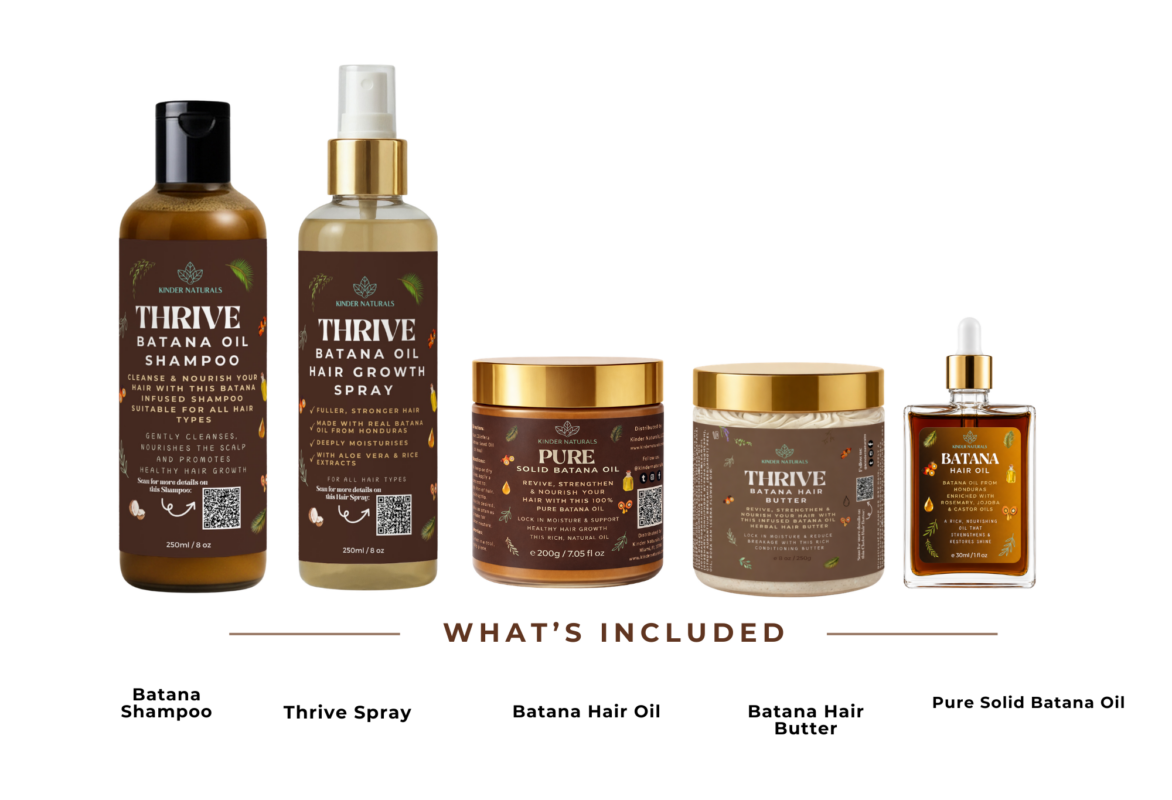
For those who want to incorporate authentic Batana oil into their routine, we offer it across several products all formulated with oil sourced directly from Honduras.
Our Pure Raw Batana Oil is the most direct way to use it applied to the hair and scalp as a pre-wash treatment or mixed into a conditioner for an intensive moisture boost. The colour, texture and smoky aroma tell you immediately that this is the real thing.
The Thrive Batana Oil Hair Growth Spray brings the benefits of Batana oil into a lightweight daily format blended with aloe vera, rice protein and Pro-Vitamin B5 for a non-greasy spray that nourishes without weighing hair down. It’s the everyday maintenance option for people who want the benefits of Batana oil in a practical, quick-absorbing form.
The Batana, Rosemary & Neem Oil Hair Butter (Thrive) combines Batana oil with shea butter, mango butter, apricot oil and neem a formula designed for sealing in moisture, reducing breakage and supporting length retention over time. For dry, textured or fragile hair, it’s one of the most complete conditioning butters in our range.
And the Thrive Batana Oil & African Black Soap Shampoo incorporates Batana oil into the wash day itself, delivering gentle cleansing without stripping the natural moisture that fragile hair needs to maintain. It’s a small but meaningful upgrade to the foundation of any hair routine.
The Bottom Line
Batana oil and conventional palm oil are related through oil palms, but they shouldn’t be treated as interchangeable products. The palm oil most commonly traded globally is predominantly associated with Elaeis guineensis, while Batana is traditionally associated with Elaeis oleifera and Honduras. Palm kernel oil is different again, coming from the kernel rather than the fleshy mesocarp used for conventional palm oil.
Understanding those distinctions makes it easier to read ingredient descriptions, compare products and choose the form of Batana that best fits your routine.
Shop the Kinder Naturals Thrive Batana range: Pure Raw Batana Oil, Thrive Hair Growth Spray, Batana Rosemary & Neem Hair Butter, and Thrive Batana & African Black Soap Shampoo all at kindernaturals.co.uk.