Before Chebe powder ever made it onto your For You Page, it was already a legend.
Long before the viral TikToks, the YouTube tutorials and the breathless captions promising waist-length hair in 90 days, women in Chad had been sitting together, grinding seeds by hand, braiding one another’s hair and quietly protecting one of Africa’s most extraordinary haircare traditions. Centuries deep. Passed from mother to daughter. No algorithm required.
So let’s talk about where Chebe actually comes from because the real story is so much richer than the trend.
The Women Who Started It All
Chebe powder is traditionally linked to the Basara Arab women of Chad, particularly those from the northern Guéra region. These women became known across the continent for something remarkable: consistently long, thick, healthy hair often reaching waist or even hip length in one of the driest, harshest climates in Africa.
And no, it wasn’t genetics alone. It was a ritual. A deliberate, consistent, community-centred practice that these women had been refining for generations. According to Vogue, the Chébé ritual has existed for centuries and continues to be passed down through families in Chad to this day.
What makes this so fascinating is that it quietly dismantles a myth many of us have grown up with the idea that textured hair simply “doesn’t grow long.” It does. It always has. It just needs the right conditions to thrive.
What Is Chebe Powder, Actually?
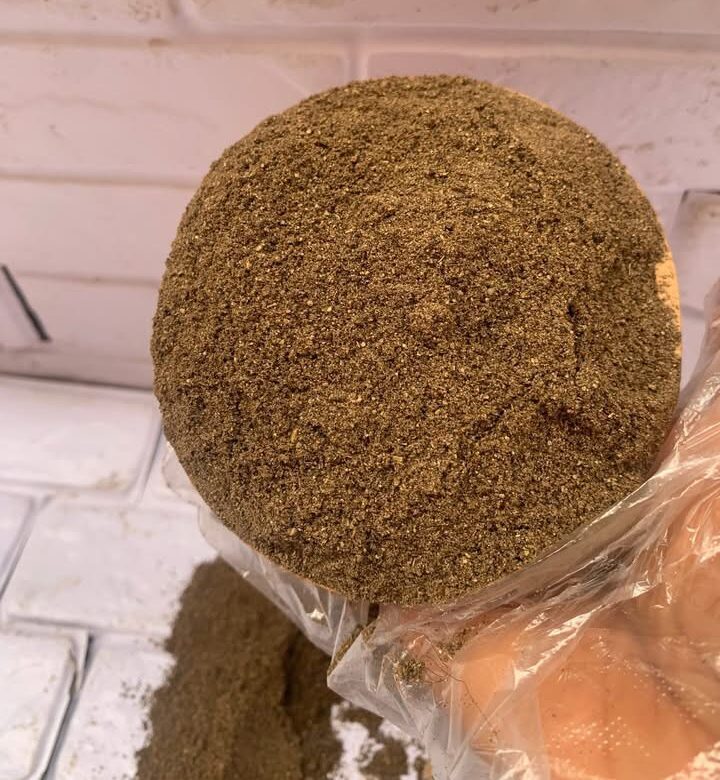
Here’s something the internet often gets wrong: Chebe is not a single ingredient. It’s a blend a carefully assembled mix of seeds, herbs, spices and aromatic resins that have been used together for their collective protective properties.
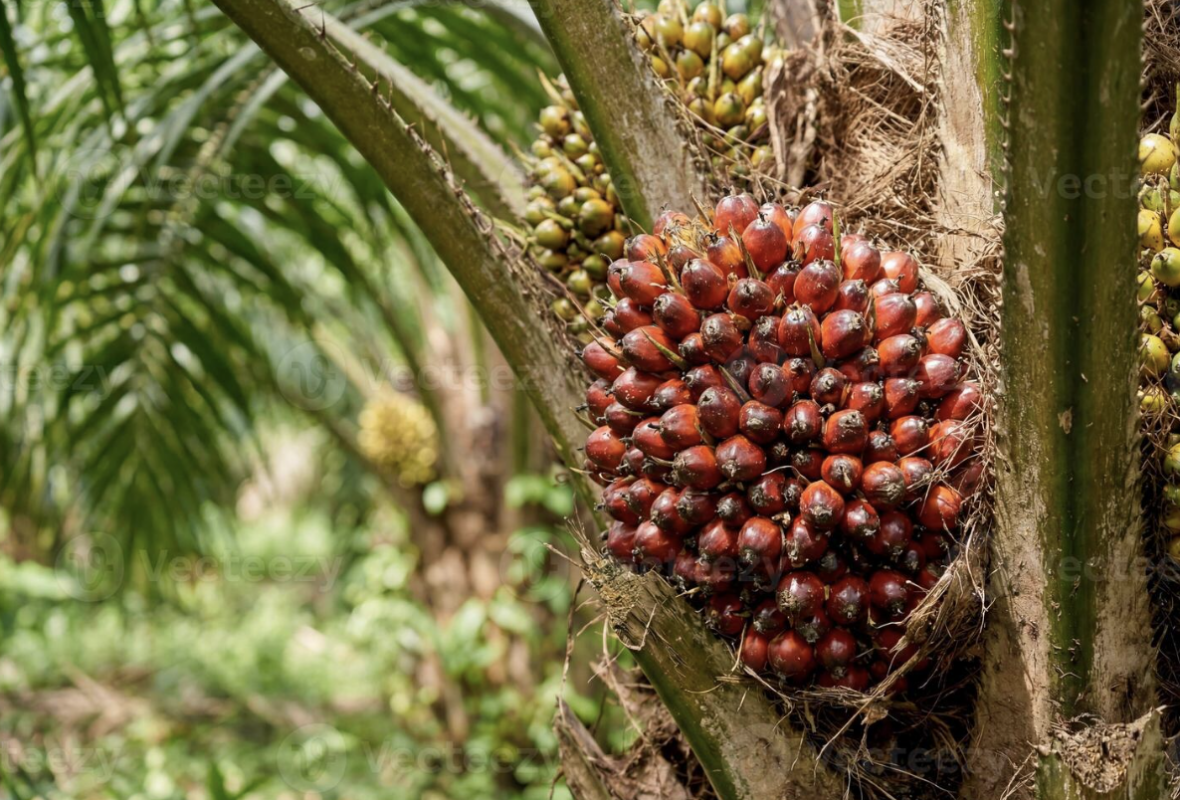
The star of the show is the seed of the Croton gratissimus (also known as Croton zambesicus, or Lavender Croton) plant, native to Chad and surrounding regions. But a traditional Chebe blend doesn’t stop there. A full recipe typically includes:
- Chebe seeds (Croton gratissimus / Croton zambesicus)
- Mahllaba Soubiane seeds similar to mahaleb cherry kernels
- Cloves for their aromatic and conditioning properties
- Samour resin a gum arabic or acacia resin
- Missic stone or musk ambrette for fragrance and depth
- Oils or animal fats traditionally sesame oil, shea butter or tallow
- Sometimes Khumra or Humra perfume oils for scent
Each ingredient played a role. The resins helped the mixture adhere to strands. The oils locked in moisture. The seeds provided the core conditioning benefit. This wasn’t a random collection of ingredients it was a formulation developed over time by women who understood their hair intimately.
The Ritual: A Full Sensory Experience
This is where things get really interesting because the way Chebe was applied was just as important as the ingredients themselves.
The process began with harvesting and drying the seeds. They were often roasted before being ground by hand using a mortar and pestle which is why authentic Chebe powder has that distinctive earthy, smoky, almost burnt aroma. If your Chebe smells like nothing or like artificial fragrance, that’s your first red flag.
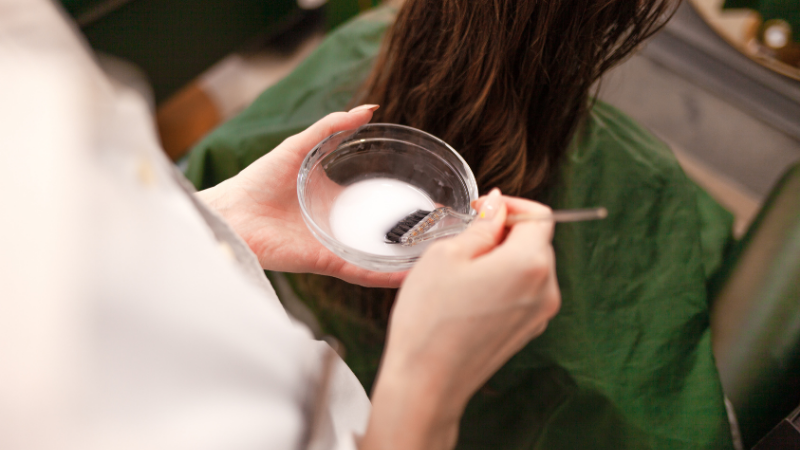
Once the dry blend was ground to a powder, women would prepare several bowls: one with water, one with oils and butters, one with the Chebe blend itself. The application was done section by section not rushed, not careless.
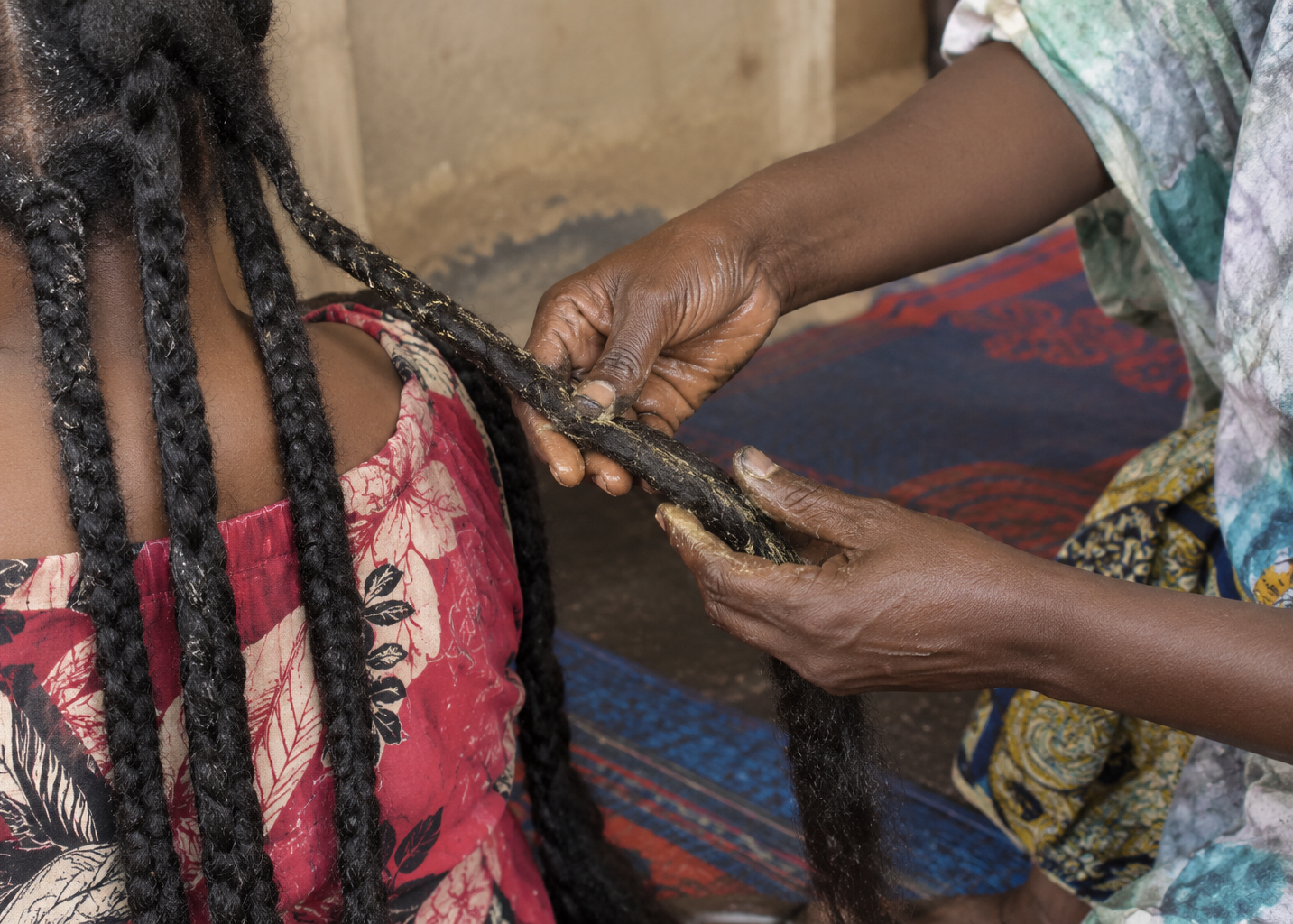
Hair was first lightly dampened, then coated with oil or butter, then the Chebe paste was worked carefully through the lengths and ends of each section before being braided into long plaits or twists. The key detail? Chebe was primarily applied to the hair shaft and ends not massaged aggressively into the scalp.
Board-certified dermatologist Dr Uchenna Okereke, quoted in Allure, makes an important point here: Chebe is not believed to stimulate hair follicles directly. Its power lies in moisture retention and breakage prevention keeping existing hair strong, flexible and protected rather than forcing rapid new growth. That’s a distinction worth sitting with.
The Secret to Seeing More Length
Healthy-looking length isn’t only about how quickly your hair grows. It’s also about helping to protect the length you already have.
This is one of the most interesting lessons we can take from traditional Chebe haircare practices in Chad. By keeping the hair moisturised, protected and regularly cared for, the focus is on reducing the dryness and breakage that can make it harder to retain length over time.
Your hair can be growing consistently, but if the ends are repeatedly becoming dry, weak and breaking, that progress can be much harder to see.
That’s where length retention comes in. A routine that supports moisture, strength and protection can help you hold on to more of your hair as it grows, allowing your natural progress to become more visible over time.
Growth matters. Retention helps you see it.
The traditional Chebe ritual addressed exactly this by focusing on:
- Protective styling keeping hair in braids reduced daily friction and manipulation
- Consistent moisture the oil and butter layers prevented dryness and brittleness
- Low manipulation once braided, hair was largely left alone to rest
- Climate protection in northern Chad’s dry desert heat, that moisture barrier was everything
- Breakage prevention strong, flexible strands simply don’t snap
The result? Hair that actually stayed on their heads long enough to reach remarkable lengths. Not magic. Strategy.
How to Spot Authentic Chebe (And What to Watch Out For)
As Chebe’s global popularity has grown, so has the market for poor imitations. This matters because if you’re using a product that contains very little actual Chebe, you’re not really experiencing the tradition at all.
Genuine Chebe powder, sourced directly from Chad, typically has:
- An earthy, roasted, smoky scent unmistakable once you know it
- A coarse, slightly gritty texture rather than a silky-smooth powder
- A brown to dark brown colour depending on how heavily the seeds were roasted
- Visible herbal particles and resin fragments throughout
- A traditional ingredient list without excessive fillers or artificial fragrance
Experts familiar with Chadian sourcing, flag that some products sold online as “Chebe powder” contain very little of the actual ingredient padded out with fillers and heavy synthetic scent to mask the absence of the real thing. At Kinder Naturals, we source our Chebe directly from Chad, keeping the ingredient as close to its traditional form as possible. You’ll find it across our Chebe collection: our Chebe Powder, Chebe Hair Butter and Chebe Oil, so you can incorporate this tradition into your routine in a way that actually works.
Honouring the Tradition in a Modern Routine
We’d be the first to admit that most of us aren’t going to spend an entire afternoon grinding seeds and braiding in paste the traditional way. Life is busy. Routines need to be practical.
But the philosophy doesn’t have to be lost in translation.
Modern adaptations like leave-in butters, hair oils and protective styling products that incorporate Chebe can still deliver on the core principle: moisture, protection and consistency over time. Whether you’re applying a Chebe butter before braids, refreshing your ends with a Chebe oil mid-week, or incorporating the powder into a deep conditioning session, you’re working with the same logic those Chadian women were working with centuries ago.
Less about quick fixes. More about showing up for your hair, consistently, with intention.
The Bigger Picture
Here’s what we keep coming back to when we think about Chebe: this tradition existed and worked long before it needed a hashtag to validate it.
The women of Chad weren’t waiting for a dermatologist to approve their ritual or a beauty brand to bottle it for them. They had knowledge, passed down through generations, refined through lived experience in one of the most challenging environments on Earth. That knowledge produced results that have genuinely impressed hair scientists when they’ve taken the time to study it.
That’s worth more than a trend. It’s worth understanding, respecting and when we use these ingredients acknowledging properly.
Chebe isn’t a miracle powder. It’s a centuries-old system of care. And the more we understand its roots, the better we can use it.
One of the things that makes the traditional Chebe ritual so interesting is that it goes beyond the ingredients themselves.
More Than a Haircare Routine
Traditionally, haircare was something women did together. Hair was sectioned, treated and braided with the help of others, creating time to share techniques, knowledge and conversation.
That sense of care and consistency is just as meaningful as the ingredients. Hair routines can be practical, but they can also be time set aside to care for ourselves, our hair and, sometimes, each other.
As routines and products evolve, there’s something valuable in remembering where practices like Chebe began and respecting the traditions and communities that have kept them alive.
And we’d love to keep that spirit of sharing going.
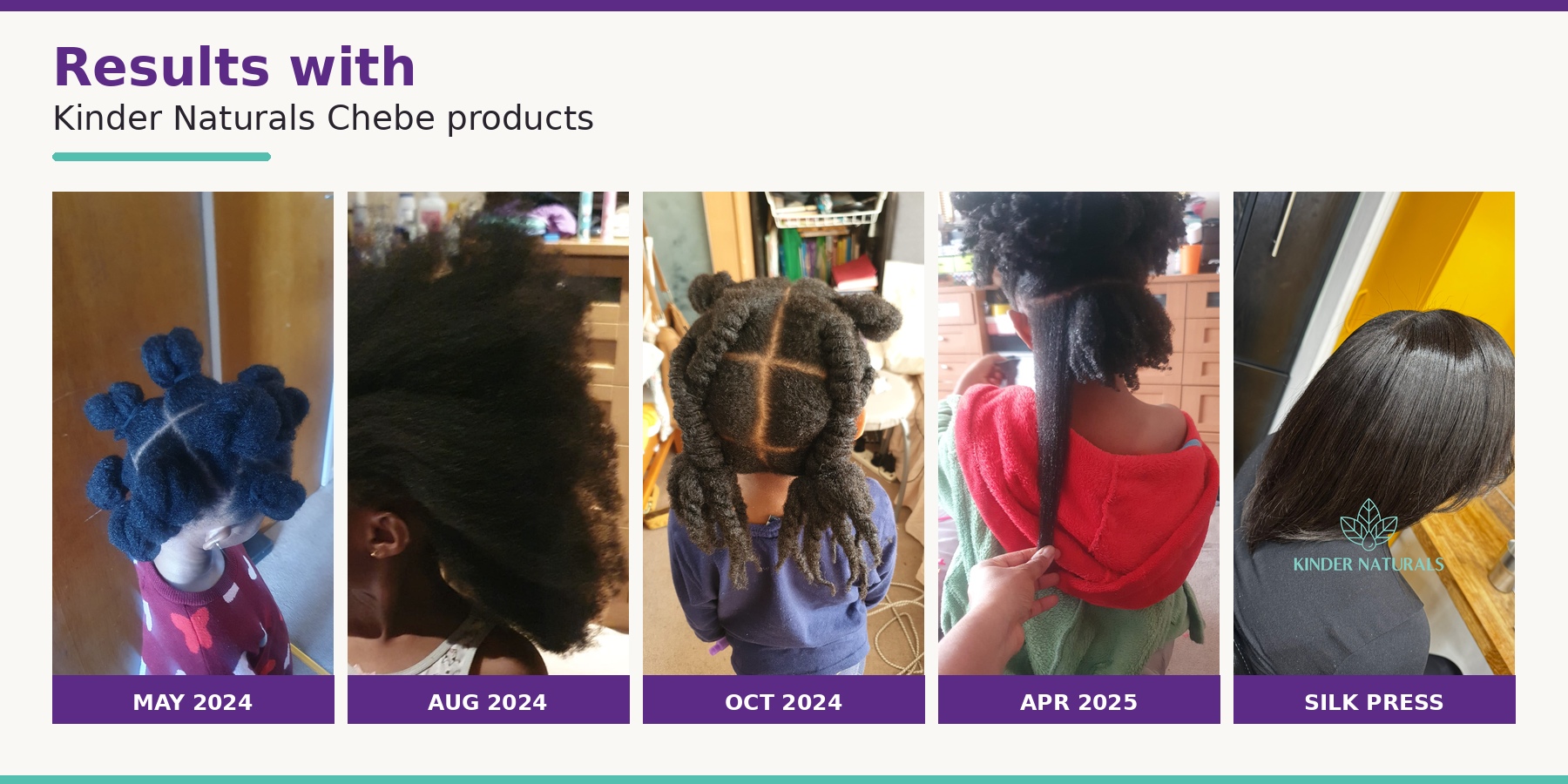
If Kinder Naturals is part of your hair routine, share your progress with us. Whether you’re working towards retaining more length, improving the condition of your hair or simply becoming more consistent with your routine, we’d love to see your journey.
Join the Kinder Naturals community →
Sign up to our mailing list for haircare tips, product updates and more from Kinder Naturals.
At Kinder Naturals, our Chebe collection is rooted in authentic sourcing and the original philosophy behind the tradition: moisture, protection and consistency. Shop our Chebe Powder, Chebe Hair Butter and Chebe Oil to start building your own ritual.
References
- Valenti, L. The Thousand-Year-Old Hair Ritual That’s Alive and Well in Chad. Vogue, 8 March 2022. Read the article.
- Carter, C. Will Chebe Powder Really Grow Your Hair Down to Your Waist? Allure. Features board-certified dermatologist Dr Uchenna Okereke and cosmetic chemist Ginger King. Read the article.
- Elsie Organics. Chebe Powder: Everything You Need to Know. Read the article.
- StimuGro. Customer Frequently Asked Questions. Includes guidance attributed to Chadian trichologist Dodji Ousmane. Read the article.